

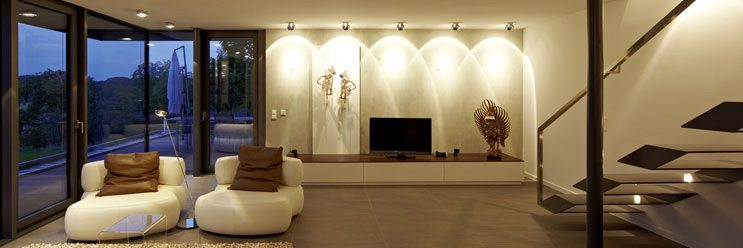
A living room is the beating heart of any home. It is where you entertain, where you play and where you relax. It’s the first impression you give to those who come to visit and the decor, furniture, photographs, paintings and objet d’art that this room contains offer up a very clear statement of your personality and tastes. However, according to Ajay Vasdev, founding director of Asco Lights, all this pales into insignificance compared to the way in which you choose to light your living space.
With open-plan living showing no sign of giving up its on-trend status, the functionality of rooms within a home can easily become blurred. After all, if your open-plan living, dining and food preparation space has all these activities going on, how do you separate one from another, and would you want to anyway?
The answer is, of course you do. However enjoyable it is to be able to speak to your guests while you’re cooking or watch the game while you’re dining, there are times when you will want a more intimate space. Traditionally interior design will use different floor coverings, decor and separating furniture to do the job, but lighting can be used even more effectively to not only define spaces but also to offer superior flexibility in the task and the ability to set and change the mood or ambience of a room at will.
Here are a few tips that Ajay gave us when we spoke with him this week to let us know how his lighting consultants and designers go about defining living spaces for their clients:
1. Know your client. It’s not good enough to take a brief and run with it. To create truly memorable, practical and liveable lighting you need to completely understand your client. What do they use their spaces for, when do they use them, and how do they use them? A great lighting design does not come from angles and intensity, spatial dimensions and natural light ingress alone. Great lighting design comes from understanding a client’s aspirations for their space, knowing their movements and most important focal points and designing around their personality and that of their family. Lighting design is the art of illuminating someone’s life the way they wish to view it. Know your environment. Everything about a living room can affect the way you light it. The decor and floor coverings, window coverings and furniture all have the power to absorb or reflect light, to tint it with colour or to clash with it. Then there is the amount of natural light the room is washed with and the way this light travels through the room throughout the day. All of these must be considered before you can even start to fashion a lighting design for a space. Understand your focal points. Every room has a something of interest that a client will wish to illuminate. It might be an architectural feature or a reading space, a work of art or a wall full of family photos. These are the accents that punctuate the living room’s background lighting, and are often the personality that makes a space a home.
2. Design your defined space. Lighting design these days is less about spotlights and more about recessed lighting that prioritises the beauty of light over the harshness of the light fitting, trimless lighting offering soft washes of colour or illumination that can be located anywhere from ceiling to floor to form exciting pools of light. It’s about up lights and lamps that offer their own softly defused light that subtly
accentuate locations, allowing more radiant creations such as a bespoke chandelier to shine forth
3. Set the mood.Home automation has totally revolutionised the world of domestic lighting. You now have the power to control not only the intensity of the light in your spaces, but also the colour, direction and combination of lighting to offer you true flexibility in how you define and redefine your spaces based on your mood and the functional use of the space.
The way you choose to light your living room says something about you, the way you live your life, your eye for detail and artistic temperament, or simply that you put your trust in the right lighting designer.
